
A promise isn't worth anything
without proof

You could be our next success story

Marketing a venue isn’t about ads alone. It’s about positioning, timing, experience design, and removing the friction between interest and booking. We move fast, test aggressively, and only deploy strategies that create measurable impact. No theory. No templated playbooks. Just ideas that work in the real world.
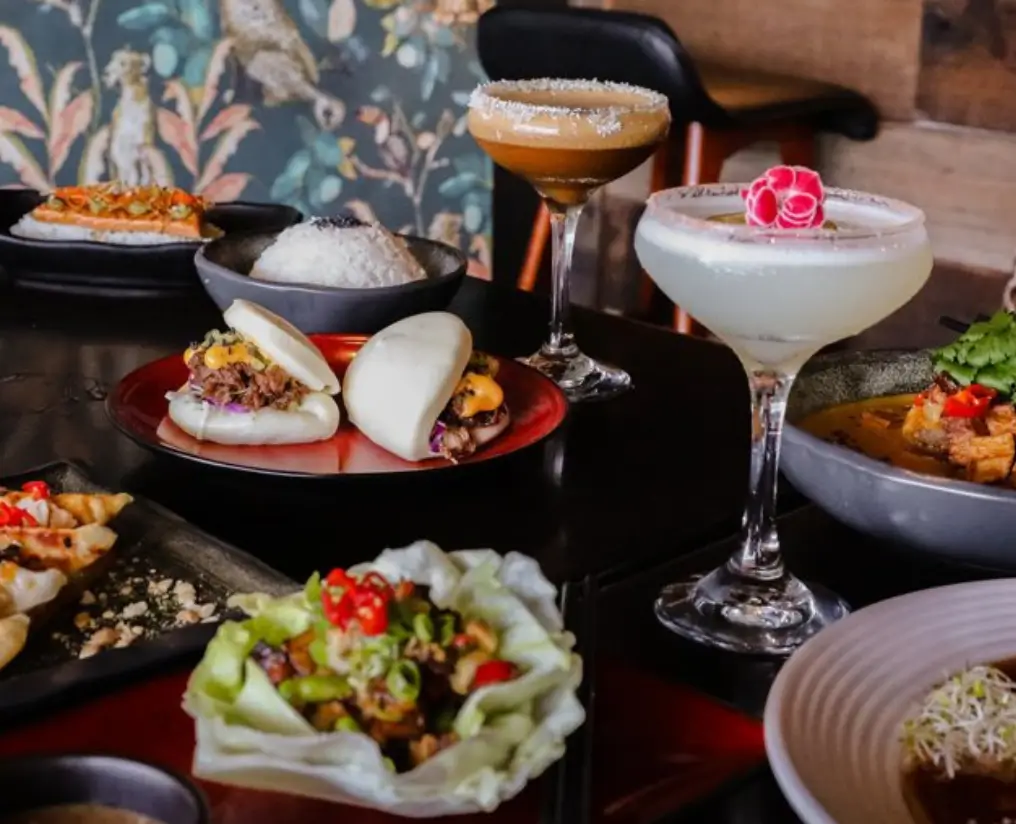
From $45,000 to $75,000 — a 66% lift in 30 days

The client is a premium casual Asian restaurant on the Gold Coa heavily reliant on weekends, with weak weekdays and monthly turnover sitting between $40K–$50K. Closed Tuesdays, trading Sundays. On the surface it looked busy, but the business depended on discounting, owner presence on the floor, and unpredictable demand. We repositioned the experience to feel aspirational rather than transactional, used Meta-led demand creation (~$5K/month) to make the venue the place people had to be, and aligned marketing with operations before pushing scale.

We swapped the trading week — closed Sundays, opened Tuesdays — so the venue could capture mid-week diners with no competitive equivalent. Within 30 days, baseline monthly revenue lifted to ~$70K, with peak months hitting ~$75K. Tuesdays became the third-best day of the week behind Friday and Saturday. A record Saturday hit ~$7K in week three. Once demand existed, First Table, excessive happy hours, and price-led promotions were removed entirely.

This case study breaks down how mid-week demand was rebuilt, why “ads fix everything” never works on its own, and why sustainable growth only happens when marketing and operations move together.

From zero brand awareness to 6 figures in 6 months.
This pickleball venue launched with zero brand awareness, an eight-court footprint that looks bad if it isn’t busy, and fixed costs from day one. To raise the stakes, it opened next door to the city’s category leader — home of the National Pickleball League, deeply sponsored, well-known owner, the established “coolest place to play”.
The challenge wasn’t optimisation. It was trust and volume, fast. We treated this as a go-to-market problem, not a growth one. Discounts were used as short-term trust accelerators, not margin leaks — 30% OFF exclusive to email subscribers (gated through a pre-launch competition), 20% OFF public. Offers were framed as “early access” and “founding players”, not desperation. Meta carried 65% of the launch budget for visual demand creation; Google carried 35% to capture active search. T
he result: a 500-person email waitlist built pre-launch at ~$1.50 CPL (vs the $5–10 we’d budgeted). Month one closed $2K above the $55K target. Month two utilisation hit 46% — 15% above target. By month six, weekly utilisation was sitting at 68% with weekends and evenings completely full. The client moved from planning a second venue at the 6-month mark to actively looking at month two. This case study breaks down how to launch big enough that the venue never feels empty, why energy matters more than polish, and how to design a repeat-based business from day one.

$30K monthly revenue uplift on an already busy CBD restaurant — without discounting

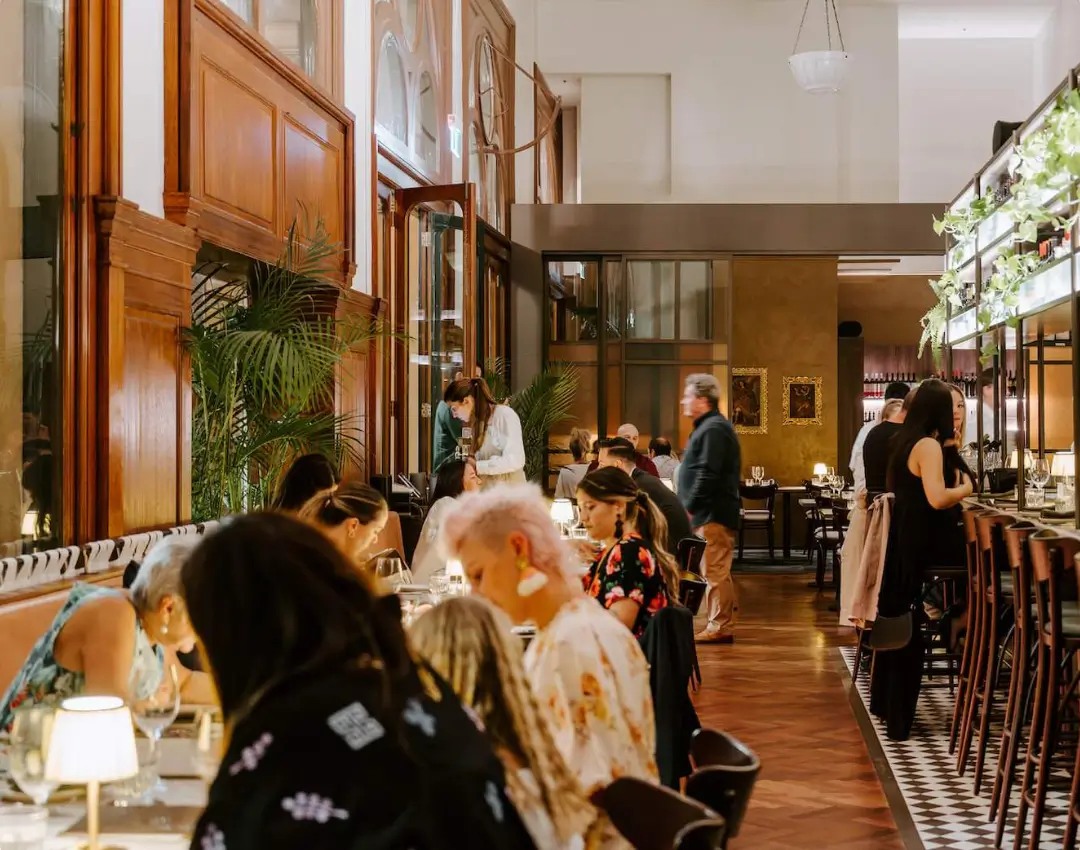
This Sydney CBD fine-dining restaurant was already well-known, busy and generating over $440K a month when we started. The challenge wasn’t awareness or survival — it was unlocking meaningful uplift from an already successful base, with weekends (particularly Saturdays) consistently underperforming relative to the venue’s quality and visibility. Marketing was fragmented.
The website under-sold the venue — it looked like a restaurant site, not the destination it actually was. Paid media lacked cohesion. Content was high-volume but unfocused. Email had no clear intent. We repositioned the venue as an experience-led destination, not just a place to eat — rebuilt the website to lead with the heritage building, terrace, atmosphere and theatre dining; productised the drawcards (ceviche, table-side asado, flambé desserts); and partnered on a San Pellegrino terrace activation as a low-commitment entry point for first-time visitors. By the second month of implementation, the venue lifted from $440K to $470K — a 10% revenue uplift driven largely by stronger weekend performance, without discounting. Walk-by interest converted into intentional bookings.
The venue became a destination choice, not a risk decision. This case study breaks down why selling the space (not the menu) drives weekend demand in premium dining, how theatre dining moments become productised hero experiences, and what happens when an already successful venue stops marketing like a restaurant and starts marketing like a hotel.

From $11K/month to $4.5M a year

When we took on The Great Escape, it was a single Carlton escape room turning over $11,000 a month, well-loved by regulars but invisible to everyone else, with no marketing, no booking system, and a venue that ran entirely on its owner.

Over 32 months we turned it into a four-venue portfolio across Victoria, New South Wales and South Australia, doing $430,000 in monthly group revenue, a $4.5M annual run rate, at 30% EBITDA.

The core offering never changed, what changed was the engine on top. We built a full-funnel paid acquisition stack, turned the room themes themselves into a brand moat, engineered a review system that compounds organic discovery, and ran counter-cyclical demand and occupancy management almost no operator uses.

Carlton grew 8× in two months, Bendigo quadrupled month-one revenue, and Adelaide set a record in its first month.
That’s a 21× lift from the same space, same rooms, same neighbourhood, proof that disciplined systems, not bigger budgets, scale a venue.


We have already scaled venues like yours.

Ready to fill your calendar?